Saturday, 20 August 2011

Comparing and Contrasting


The two artworks that I have selected to study are Gerhard Richter’s Lesende (Reader) (1994), and Édouard Manet’s A Bar at the Folies-Bergère (1882). These are clearly starkly different pieces, painted over a hundred years apart from each other, but they do also contain a number of strong similarities.

The most obvious similarity is probably the medium: they are both oil on canvas paintings, a medium that is certainly much less common in contemporary art than it was in the late 19th century when Manet’s painting was executed. Secondly, there is the subject matter: both are centrally portraits of women. It should also be noted that in Lesende the subject is in profile, rather than in the Bar, where the subject is both face on, and with her back to us in the reflection. The figures represented in each image are also very still in nature, totally unmoving. These aspects create a strong initial visual similarity, but other than this the two differ dramatically.

First I will consider the Manet work. The painting style here is very typical of the impressionist movement of artists. The brush strokes, while less obvious than in some more extreme impressionist works, are still on display. Perspective is also not treated as important; the reflection in the mirror is almost entirely nonsensical. The bottles in the lower left hand corner of the painting and the ones in the reflection seem to be completely different ones, and the reflection of the woman, who is facing us straight on, does not match up. In the reflection she is off to the side of herself, where as her reflection should be directly behind her, based on the composition of the painting. These are not bad points, just to say that physical realism was not the goal of this painting, as was the thinking behind the rebellious impressionists. Indeed, the photograph had been invented nearly half a century earlier; perhaps this is a response to and rejection of the cameras way of seeing things. The painting was executed in a studio, rather than from a photograph, on location, or from memory. The woman was an employee at the bar, and Manet asked her to come to his studio dressed as she would for work, and he painted this scene from this.

Lesende, on the other hand, is an example of a very photorealistic approach to painting, as was Richter’s goal in this and many of his other paintings. The background here is sparse and irrelevant; the sole focus here is the woman in the centre. Richter executes these paintings by taking a photograph and projecting it onto a canvas, from where he paints over it to achieve an exact likeness. Finally, he adds his signature blur, which enhances its photographic qualities. By painting in such a way, he is perhaps as rebellious as the impressionists were for rejecting realism, as now realism is so far from the norm, that it itself has become against the common order of things. Richter was heavily criticized for the paintings of his third wife, Sabine Moritz, but not for this one, and another that both ‘conceal the subject’s identity…with generic titles…and visibly allude to art-historical iconography’.[1]

As to the Manet work, there is a lot of disagreement regarding the descriptions of the painting, and even more on the interpretation.
This barmaid is not necessarily what she may appear to be. The dislocation of her frontal image with her reflected image conveys the tension between what she represents to the ordinary patron of the establishment and how the painter sees her, or how she regards herself.[2]
The mirror creates a lot of issues regarding meaning, with many theories proposed. One is that of duality, an obvious concept when involving mirrors.
Surface         Depth
            Frontality      Obliqueness
            Symmetry     Asymmetry
            Timelessness Time
            Being             Becoming
            Symbol          Narrative
            Authority      Individualism
            Sacred          Profane
            Purity             Concupiscence
            Virgin             Whore[3]

The pairs I am going to focus on are these last two pairs, and symbol and narrative. The glass directly in front of her, containing two roses, is a strong example of symbolism. The white rose represents purity, as does the glass filled with water, and there is a corsage of white roses on the woman’s chest as well. These are all symbols of her virginity and purity. But in the mirror, we cannot see any of these things; instead we can see her talking to a man, and in such a situation, in this particular bar, this can be seen as alluding to a sexual proposition, referring to her possible identity as a prostitute.

In the Richter painting, there is almost a sense of two meanings behind it. The subject is his wife, and he has painted his different wives many times before, but in this painting, her identity as his wife is of no importance. She is simply a woman, reading a newspaper. The fact that she is his wife is of no consequence to the painting, the purpose here was to create a photographic looking painting; the importance is in the technique and visual appearance, rather than any sort of underlying meaning.

While these two paintings have some quite strong similarities at a basic level, both being oil paintings (even at a time when such is very uncommon), both being portraits of women, the differences are far stronger. The more recent work focuses on painting for realism, in a time where this is seen as dated and unimportant, and the older work rejects such notions, as part of a movement that were very against the grain of the time, appreciating a more realistic style to art works. With the Richter the focus is more on the technical aspects of
creation of the painting, rather than any hidden meaning, or the
identity of the subject.  In contrast, Manet’s painting has many subtle
complexities both in relation to the form of representation and the
subject of the painting. These are two very different art works, the product of the many years between them, but both fantastic and beautifully executed pieces, for entirely different reasons.


Bibliography
Stefan Gronert, Gerhard Richter Portraits, Hatje Cantz Verlag, Ostfildern, Germany, 2006
Robert Storr, Gerhard Richter: Forty Years of Painting, The Museum of Modern Art, New York, 2002
Hans-Ulrich Obrist, Gerhard Richter, Dietmar Elger, Gerhard Richter: Text: Writings, Interviews and Letters 1961-2007, Thames & Hudson, 2005
Beth Archer Brombert, Rebel in a Frock Coat, University of Chicago Press, Chicago, 1996
Bradcord R. Collins, 12 Views of Manet’s Bar, Princeton University Press, 1996


[1] Stefan Gronert, Gerhard Richter Portraits, Hatje Cantz Verlag, Ostfildern, Germany, 2006, p. 99
[2] Beth Archer Brombert, Rebel in a Frock Coat, University of Chicago Press, Chicago, 1996, p. 441
[3] Michael Paul Driskel, Bradford R. Collins, 12 Views of Manet’s Bar, Princeton University Press, 1996, p. 145

Final Mark:  64%, 2-1

American Cinema - Violence and Editing

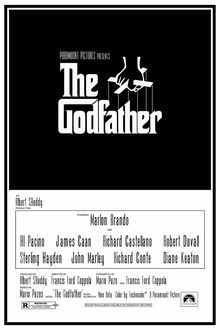
Psycho and The Godfather are two landmarks of American cinema, with some of the most famous scenes, tropes and characters of any film ever made. Psycho was directed by Alfred Hitchcock, known as The Master of Suspense, and released in 1960. It was shot in black and white in order to save money, after Paramount denied the film a larger budget, as they did not think it would be a success. It grossed over $32 million from its eventual budget of $800,000. Directed by Francis Ford Coppola, The Godfather (1972) is the first in trilogy of films about the Mafia, considered the quintessential gangster film. Both films were renowned for their shocking use of violence at the time, but both manage to do this without being gruesome, showing very little actual gore. Instead violence was implied by the way these films were edited.

There is one sequence in particular that stands out in The Godfather as exemplifying how editing can increase the sense of violence. The scene takes place towards the end of the film, and is shown to us through parallel editing, or crosscutting. This establishes action occurring at the same time in different locations. The camera cuts away from one location of action to another, suggesting the simultaneity of these two actions. The scene can also be assumed to be taking place in near real time, with very few gaps in the characters’ actions.
The sequence begins with a Christening ceremony in a church, and then cuts between that and five scenes of gangsters preparing for, and then carrying out assassinations on the rival mafia families. The crosscutting between these scenes, one of a very calm and holy ceremony, and the others of strong violence, creates a strong contrast between them. By looking at a small baby being blessed with holy water one second, and men being riddled with bullets the next you are shocked more by this violence, as if it is taking place within this holy church, though of course it is not. The fact that the audio from the church is continuous throughout the entire sequence, and spills over into all the shots, helps with this. Even when watching these grisly murders, we can still hear the organ music and the priest’s incantation. At the beginning of the scene we go from the church, to a future scene of violence, and then back to the church. As the scene progresses however, we see several sequences of violence in a row` before returning to the church. This is matched by the organ music playing in the church, which at the beginning of the scene is playing relatively softly and gently. But this builds with intensity and volume as the scene progresses, and the murders take place. This might seem out of place or unusual for a Christening, but it helps to intensify the scene very well, keeping us on the edge of our seat as we bear witness to the violence.

We actually see very little violence: what we do see gives us the impression of quite extreme violence, when in reality we have not seen much in terms of physical wounds or gore. The first murder takes place off-screen. We see the victims and assassin confront each other, and the assassin draw his gun, but then the camera cuts to a shot where we see the assassin shooting through a doorframe, but we cannot see through this door.
In the second scene we see a man wearing glasses, and then suddenly we hear a gunshot, and a large crack appears in his right eyeglass, blood pours down from behind, and he collapses, dead. From this we infer that the man we saw entering the room before this, has shot him through his glasses. Of course we never actually see a wound; the cracked glass covers this up quite well. The blood flowing from behind might cause people to think that this is particularly violent, but really it’s just blood, a trick used for quite some time by this stage, and a very effective one that shocks many people and will cause them to think back on the scene with repulsion.
In the third scene, slightly more is seen, as we do see a gun firing into a man’s chest, and a spurt of blood coming out from the wound. Again this scene uses breaking glass to dramatize the event, and obscures the person behind it, meaning any gore can be implied rather than shown.
The fourth scene has two men run in to a bedroom and then unload automatic guns into a couple beneath the bed sheets. The woman screams, they both writhe around in pain, and holes and blood appear from the sheets. This is a very intense scene, with the most violent reaction from any of the murder victims, and it is also the shortest of these assassinations. The men rush in very quickly and spray bullets into this couple. The volume of bullets makes this seem over the top, gratuitous and quite extreme.
The fifth and final scene is where a man dressed as a policeman shoots two men standing next to him, then shoots a third man at a distance running away. The first two victims here simply collapse after being shot, and with the third victim we get our first glimpse of any sort of gore. Blood drips from a large open wound in the man’s back. It isn’t explicit, as his clothing covers a lot of it, but we can see enough to get a strong impression. Overall we actually see very little physical violence, as most of it is implied, or disguised, or even James Bond style violence where a gun fires and a person falls down, no more. Presenting the violence in this way requires the audience uses their imagination to fill in the blanks, usually resulting in a memory of something much more shocking and gruesome than reality.

The camera movements in these assassination scenes are nearly completely non-existent. Nearly every shot is static, and most are medium shots, with a few close-ups on the victims as they are dying or after they are dead. The camera tends to linger on the person after their death, forcing us to look at them and take in the reality of the shocking event in greater depth. After all the murders have taken place, we get another quick recap of all but one of the victims’ dead bodies, as if we are being reminded of the body count that has taken place in the last few moments. Other than this choice to use static shots to show the violence, the scenes are fairly standardly edited, obeying all sorts of continuity editing rules and formalities.

This following of continuity editing rules is very contrary to Psycho which portrays violence in a very unconventional cinematic style. Analysing closely, by my count there are 33 separate shots in one 40 second segment. This is a remarkably high amount of individual shots, compared with the typical average for films being about five seconds per shot; this is just above one second per shot. The scene referred to here is of course the shower scene, one of the most renowned sequences in all of cinema history. It begins with the protagonist, Marion Crane, taking a shower, with the viewer positioned looking outwards from within the shower, and facing the shower curtain. We see a shadowy figure appear on the other side of the curtain, and then they draw it back and brutally stab the protagonist to death. This is incredibly shocking as it is very sudden and unexpected, and it involves killing off Marion, who has been the main character up until this point, and the biggest star of the film. In fact for this reason, and others, Alfred Hitchcock instructed movie theatres that they were not to let anyone enter the film after it had begun, he wanted this scene to have its maximum possible impact.

The scene involves very rapid jump cuts, that is, a cut from one shot to another that doesn’t obey the 30° rule of continuity editing. This rule is that each separate shot should be at least 30° apart so as not to seem abrupt and jarring. It also doesn’t obey the 180° rule of spatial continuity, this is that when showing two people together, the camera should always stay on one side of them, and not flip over to the other side, crossing the 180° line. The breaking of these rules makes the scene feel very disorientating and jarring. It confuses the senses and incites feelings of uncertainty of what exactly is going on, as does the frequency of cutting. This scene involves many jump cuts and shots, from all different angles and distances, though most are in the “American Shot” to “Italian Shot” range, that is, 3/4 length shot to extreme close up, with a medium shot to start and finish the scene.

The shots move all over the place, from a close-up of the victim’s feet in the shower, to one of her mouth, to her upper body flailing, directly above her, and looking into the face of the killer, obscured by silhouette, plunging the knife down from up high. By keeping the killer obscured in darkness it performs two functions. First of all it disguises his true identity as Norman Bates, and second he appears much more threatening as this dark shadowy figure, emotionless and terrifying. These very rapid cuts seem frantic, and create the sense of panic that our ill-fated victim must be feeling at the same time. This is very effective at frightening the audience as we cannot see what exactly is going on. This is especially so as we never actually see the knife penetrate flesh, other than for three frames, and it is necessary to watch this sequence in slow motion in order to notice this. At normal speed it just looks like the knife speeding towards her body. By not seeing the knife enter her, we aren’t sure if it is; she’s screaming and recoiling certainly and there is a sound of a knife, but we can’t be sure. It’s not until almost the end of the scene that we get a shot of her feet, and her blood running down the drain in the bath, that we know for certain. It’s possible it was done like this because of the production code of American films at the time, forbidding films to portray violence of a graphic nature. This film surely pushed the boundaries at the time, both for sexual content and violence.

The staging of this scene is also important, in that she is in a shower and naked, which makes her very vulnerable. It is slippery and she is unable to fight back or even run away. She is trapped in the bath with the killer blocking her only exit, but even if she could get past her attacker, it would be impossible for her to run in her condition. The feeling of helplessness and terror is created, a feeling which transferred to some of the audience; stories of people refusing to have showers after viewing this scene are quite common.

There are also some very interesting rhythmic matches in the editing, as the shot frequently changes with the sound of the knife, or her scream, possibly even in time with the strokes of the violins on the soundtrack. The unrelenting sound of the string instruments, beautifully composed by Bernard Herrmann, drive the scene, like the knife, never stopping going in to her, just attacking over and over and again. This helps set the frantic pace of the scene, exaggerating it to our perception. Her very shrill scream also works well with the tone of the violins, thickening the audio track into a single piercing note of both adrenalin and fear.
The shots of Marion are all framed so that all we can see is a small portion of her body, usually flailing around. By never showing us the whole picture, they avoid the tricky business of us seeing either her naked or her being brutalised. The other effect this creates is that we cannot quite see what is happening to her, and though we sort of would like to, we would much rather avoid it. The camera movement is appropriate to her situation; it is as if we are watching her being cut to pieces, both visually and literally. All of these shots are also static, but with this scene it’s probably more a case of camera movement in such short shots would confuse the senses too much and make it seem messy, with such short shots it seems unnecessary. So we watch her spin in her futile attempt to stop the killer, and eventually we get a medium shot of the killer exiting, closing this dramatic sequence. But it’s not quite over yet; Marion still claws at the wall, and attempts to get herself up by pulling at the shower curtain. But it’s too late; the curtain falls on her, symbolic of her death, as with the curtain fall of the theatre. We watch the rest of her blood pour away, and the camera zooms in on the drain. There is then a graphical match cut, from the drain hole to an extreme close up of one of Marion’s eyes, totally still and wide open. The camera zooms out to show her full head, and this is more or less the last we see of her. As with The Godfather, we are treated to this last still look of her in death, settling in the final reality of the events to us, forcing us to comprehend what has just happened.
The real trick in both of these films is making the audience think the graphic violence they see is much worse than it really is. This is most effectively done through the musical score, making both these scenes very tense, forcing the audience to the edge of their seats and to watch through their fingers. By being in this state things are imagined beyond their reality. Neither is particularly gory, the worst in Psycho being what is actually chocolate sauce running along the bottom of a bath. The Godfather gets away with a gun being fired into a man’s eye and blood pouring out from behind his cracked glasses. Unlike modern films that go in much more for the full-on gore or brutality, showing us as many mutilations as possible, these two older films do it much more with the power of suggestion and atmosphere. These are brought together by the way in which the sequences are edited, paced perfectly to shock and engage the imagination the most. The Godfather portrays the harsh contrast between the Christening of Al Pacino’s godson, while he renounces Satan, his men brutally murder his rivals. It is all these subtleties of showing but not showing, being violent without being gory, all achieved through editing and cinematography, which gives these two films their intensity and power.

Final Mark: 61%, 2-1

Editing in Citizen Kane

Two scenes in Citizen Kane that I will discuss here as examples of how editing can be used to affect story time are the flashback to Kane as a child with his parents and meeting Thatcher and the famous breakfast table montage.

The first scene, in both story and plot, is Kane’s childhood. It begins showing Kane, about ten years old playing alone in the snow. The camera then tracks backwards to show the inside of Kane’s home, with his parents and Thatcher present. The camera then tracks further backwards and the indoor characters follow it to a table. The shot composition has Mrs Kane closest to the camera, seated on the far right, with Thatcher just behind her. Mr Kane stands a little further back on the left edge of the frame, and Charles can be seen through the window in the far distance. This shot is in deep focus, so all of the characters are in clear focus. The adults then move back over to the window and the camera, still tracking, follows them. This is all done in one take, 1 minute 44 seconds long. The average take is around 10 seconds[1], so this is considerably longer than that.

The next shot begins completely static, Mrs Kane dominating most of the frame, and Mr Kane and Thatcher in the background. This shot also uses deep focus, so they are all still in perfect focus. The shot then moves back out through the window and the characters move outside to join Charles. The camera pans and tracks around to join all the characters congregating around a snowman, with Mr Kane a little further away in the background, signifying that he is of less importance, and all the others quite close to the lens. Charles then attacks Thatcher and attempts to run away. This take is interrupted by a close-up on Mrs Kane, showing her key importance in this scene. This take runs for 1 minute 55 seconds, also very long by contemporary Hollywood standards.  The close-up shows Mrs Kane holding Charles very close to her. This then fades into a shot of Charles’ sled with snow piling up on it. The scene concludes with a temporal ellipsis as we hear the sound of the train Charles is most likely on as he leaves home.

 These two long takes we can assume are in total real time, that is to say the screen duration is equal to story duration and plot duration. This editing decision has a strong effect on story time, by presenting every second of events to us it creates a strong sense of continuity, in that we don’t need to infer any events, even though usually ‘We are probably not aware of having made these inferences, but they are no less firm for going unnoticed’[2]. Story time usually greatly exceeds plot time, as story time includes elements that we do not see, that we are only told about. In this sequence there are no unseen inferred events, therefore reducing story time to equal plot time, thus creating this feeling of continuity.

The second scene, the breakfast scene, is as differently edited from the previous scene as two scenes can be. From very minor editing to very heavy, this scene is made up of six sequences at the breakfast table of Charles and Emily, his first wife. The first shot shows Emily sitting in the middle of the table, as Charles enters and sits near her, the camera tracks in, and then there is a shot/reverse shot pattern, utilising the 180° system. This then dissolves into what appears to be a camera moving past windows quickly, before dissolving back to Emily at the breakfast table, now at the opposite side to Charles. They both look slightly older, and there is another shot/reverse shot sequence. The passage of time here is clear, shown by Emily’s more mature way of talking. There is another dissolve to a joining shot and back to a further shot/reverse shot cycle, again with them older, signified by clothes, hair and voice changes. This repeats for sections four and five, and finally in number six, there is one shot/reverse shot, before the camera pans and tracks back to a long shot showing the two of them sitting at opposite heads of the breakfast table, a new table much longer than in the first shot, the physical distance between them representing their emotional distance. This is the first time we’ve seen anything other than a close-up on the characters, switching between them, and it emphasises the overall change in their relationship from beginning to end. This montage lasts for three minutes and ten seconds, which is shorter than the two takes of the previous scene, compared with the story time in each of several years versus four minutes. Each shot is also closer to the ten second average of modern cinema, though some in the shot/reverse shot are much less.

The purpose of this montage is to accelerate the progression of time, to tell a significant part of the story in a very rapid, abridged and intense way. In the first sequence they are both quite young, not much older than in the previous scene. They are newlyweds, and talk about how they went to six parties the night before. ‘The ways the young husband and wife express their feelings are far apart and so, probably, are the feelings themselves.’[3] This is shown by Charles’ attempt at a joke by pretending to be her waiter that she totally ignores, and also by his suggestion ‘to leave the breakfast table to make love, the scene ends before you see her response, but it’s so clear that the two are on different tracks that you can’t imagine her saying yes.’[4] In the five remaining sequences ‘we see the marriage dissolving from tenderness to coldness’[5], and we also see the characters age, from youth to middle age. In each of the first three sequences, Emily makes complaints about the newspaper Charles is running, about how much time he spends there, and about some of the content. She gets increasingly annoyed with Charles’ reaction, but he remains slightly playful and half-jokingly announces his desire to be president one day. The fourth sequence is about Emily’s distaste for Bernstein, and Charles’ demand to have absolute control, refusing Emily her way. The fifth accentuates this even more, being the shortest of the sequences, with only one shot of and line from each. Charles snaps that people will think what he tells them to think he becomes the demanding controlling man he will be for the remainder of the film.
They keep on breakfasting together…to preserve appearances, probably, but they speak less and less, and by the last episode their warfare has become silent, cold and without either the passion or the pleasure of open anger, with Kane at his end of the table reading The Inquirer, Emily at her end reading The Chronicle.[6]
The sixth and final sequence here is in total silence, showing them sitting as far apart as they can at the table, both reading newspapers. Charles is reading his own newspaper, The Inquirer, whereas Emily is reading The Chronicle, The Inquirer’s rival. This is an intentional and slightly childish attempt by her to upset Charles, with her taking noticeable care to ensure he can see that she is reading this rival paper instead of his.

This method of editing has the effect of greatly compressing story time into much less plot time or screen time. Indeed several years - we can’t be sure how many - are shown here over only a few minutes. The method of montage is described in Film Art: an Introduction as
Brief portions of a process, informative titles,… stereotyped images,… newsreel footage, newspaper headlines, and the like can be joined by dissolves and music to create a quick, regular rhythm and to compress a lengthy series of actions into a few moments.[7]
It then sums up the usage of it
The continuity style uses the temporal dimension of editing primarily for narrative purposes. [the effect] allows the viewer to follow the story with minimal effort.[8]
A large amount of story time is presented in a very small amount of screen time, without confusing the audience or complicating the narrative at all.

These two editing techniques have strong impacts on the narrative of the film, and they are deployed here to great effect. We really feel that Mrs Kane took a long time to come to the decision to send Charles away, that it was a tough decision. Later, in the sequence of scenes around the breakfast table, the collapse of the ‘marriage just like any other marriage’ as Leland describes it, is shown to us clearly, effectively and economically, without wasting any time. We immediately understand exactly how it deteriorated, from Charles’ late nights at the newspaper (and maybe other things), to his increasing obsessive desire to control everything. ‘Citizen Kane’ demonstrates how it is possible to use different approaches to showing the passage of time, and how the passage of time is subservient both to the film’s plot and to the meaning the film conveys.


Bibliography
David Bordwell and Kristin Thompson, Film Art an Introduction, McGraw-Hill, New York, 2010
Robert Garis, The Films of Orson Welles, Cambridge University Press, 2004
Joseph McBride, Orson Welles, Cinema One, Secker & Warburg, 1972
Pauline Kael, The Best Film Ever Made, Martin Secker & Warburg, 1971


[1]David Bordwell and Kristin Thompson, Film Art an Introduction, McGraw-Hill, New York, 2010, p. 213
[2]David Bordwell and Kristin Thompson, Film Art an Introduction, McGraw-Hill, New York, 2010, p. 80
[3]Robert Garis, The Films of Orson Welles, Cambridge University Press, 2004, p. 45
[4]Robert Garis, The Films of Orson Welles, Cambridge University Press, 2004, p. 45
[5]Joseph McBride, Orson Welles, Cinema One, Secker & Warburg, 1972, p. 50
[6]Robert Garis, The Films of Orson Welles, Cambridge University Press, 2004, p. 45
[7]David Bordwell and Kristin Thompson, Film Art an Introduction, McGraw-Hill, New York, 2010, p. 254
[8]David Bordwell and Kristin Thompson, Film Art an Introduction, McGraw-Hill, New York, 2010, p. 254

Final Mark: 54%, 2-1